Here shows me experimenting with one of the more difficult shots in the film:
SMAX Reverse tracking from Sam SheepDawg-OEight on Vimeo.
I believe the results were respectable and I will be happy to achieve this on the day of filming.
The limitation we have is we are not in possession of a dolly track. This is the most common way to produce this effect (shown below).
Since this post, I have received a camera mount for shoulders to keep moving shots steady. This will help the shot look more professional and is easier on me for filming.
Showing posts with label Research. Show all posts
Showing posts with label Research. Show all posts
Monday, 13 January 2014

Monday, 6 January 2014
Costume

Wednesday, 18 December 2013
Certificate
The film we intend on producing (Fatal Motive) will be a 12 or a 12A. This is based on the following
- Drug use (Smoking)
- Violence and Gore (Gun, Blood)
- Implied Sexual Content
Were we to produce the full film, These issues would be shown more frequently, but not intensified or glorified. The decision to certify the film as a 12 or 12A is based on the list from the BBFC website (mentioned in this post: http://asmediastudiessamshepherd2013.blogspot.co.uk/2013/11/bbfc-and-guidelines.html)
This does not affect our target audience in any way as we are producing the film for people our own age. This does not restrict the audience from viewing the film in any way.
Props Continued
 |
| The Kershaw Penguin |
 |
| The Seagull 120 film Camera |
The issue is that the seagull was originally made in 1964 which is way past our proposed timeline and whilst it does look like a vintage camera, it does not fit into the timeline we had hoped and we have therefore decided to use the Kershaw camera. This is quite a good decision in my book as the seagull is nowhere near as iconic as the penguin.
The gun has also been re-evaluated and we have found a viable alternative to the one we had before (which Max pointed out was unobtainable in the United Kingdom). I shall be obtaining this within the next few days.
Saturday, 14 December 2013
Location
As Max is in charge of location, he has found several potential locations that we both want to use. The post can be found here: http://asmediastudiesmaxshearman.blogspot.co.uk/2013/12/locations-for-filming.html
the locations are exactly what I hope we'd find as they are not very modern and fit in with our film's timeline.
the locations are exactly what I hope we'd find as they are not very modern and fit in with our film's timeline.
Tuesday, 10 December 2013
Fatal Motive: Audience and Distribution
We needed to decide on an audience for our film and we were quickly on the same page. The audience we decided upon were teems (predominantly male) that have a relative disposable income. This is because of our proposed distribution method. We have said that if we were to produce the full film, we would stream it. This is due to the lack of hugely expensive equipment and lack of budget to distribute it elsewhere. We talked about art house cinema but we decided against it in the end.
Sunday, 8 December 2013
Props
The list of responsibilities shows that we need a few props, so I have done some research into vintage cameras, I found a website that shows cameras first produced in the 40's.
http://licm.org.uk/livingImage/1940Room.html
This website is a vital resource for helping us get the right looking camera for the time.
I have looked at a flash for these cameras as this would improve the scene and found this:
http://www.etsy.com/uk/listing/166389687/1940s50s-pocket-flash-gun?utm_source=google&utm_medium=product_listing_promoted_en_gb&utm_campaign=vintage_low
http://licm.org.uk/livingImage/1940Room.html
This website is a vital resource for helping us get the right looking camera for the time.
I have looked at a flash for these cameras as this would improve the scene and found this:
http://www.etsy.com/uk/listing/166389687/1940s50s-pocket-flash-gun?utm_source=google&utm_medium=product_listing_promoted_en_gb&utm_campaign=vintage_low
This would add an aesthetic touch to the scene and would make in more believable. I do however believe that this is not an essential component.
I have found a potential prop for the gun:
This is a cheap way to get an appropriate prop and I think it looks rather realistic.

I have emailed my friend James Ivett about a rotary phone as he was able to get hold of a replica last time one was needed, I have not got a reply as of yet.
The Zippo lighter will be courtesy of my friend Benny Herrington who has one and will happily lend me the item.
I will purchase herbal cigarettes so the smoking will look realistic.
I will purchase herbal cigarettes so the smoking will look realistic.
The fake blood will be made with the techniques and items shown in this video:
The furniture, is something I am relying on people I know already having or worst coming to the worst, furniture will be hidden in darkness to stop anyone seeing that it is modern
Monday, 2 December 2013
Foleying
Foleying is a simple process in which you recreate the sound effects of films. For example you can tap objects repeatedly against sand to produce a similar sound you expect to see along with horse riding.
This is a video showing that example by a professional Foley artist called Gary Hecker:
I had a go with foleying a gunshot effect to see the ways in which I could use different objects for a sound effect completely unrelated to the sound needed. I chose the gunshot because you have to be creative if you want a gunshot effect as guns are hard to get original footage for and even harder to obtain one. The video shows the attempts I had at creating the sound effect:
I left some weaker attempts out of the video, for example an empty crisp packet as the sound was nowhere near enough to drown out the sound of me smacking it and the bang itself was weak. I chose the air packets as they had a nice echo that seemed like genuine diegetic echo and the bang was full and loud.
From this, I have learnt how to think creatively about objects and generally how important foleying is when considering sound you cannot create on the day of filming. I shall have to consider any foleying attempts necessary when planning and filming the final production.
This is a video showing that example by a professional Foley artist called Gary Hecker:
I had a go with foleying a gunshot effect to see the ways in which I could use different objects for a sound effect completely unrelated to the sound needed. I chose the gunshot because you have to be creative if you want a gunshot effect as guns are hard to get original footage for and even harder to obtain one. The video shows the attempts I had at creating the sound effect:
I left some weaker attempts out of the video, for example an empty crisp packet as the sound was nowhere near enough to drown out the sound of me smacking it and the bang itself was weak. I chose the air packets as they had a nice echo that seemed like genuine diegetic echo and the bang was full and loud.
From this, I have learnt how to think creatively about objects and generally how important foleying is when considering sound you cannot create on the day of filming. I shall have to consider any foleying attempts necessary when planning and filming the final production.
Thursday, 28 November 2013
Neo Noir Analysis (Improved Draft)
We watched several neo noir and noted how they both follow and break conventions. We looked at three films, Blade Runner, Red Riding 1974 and Mulholland Drive.


I have created a HTML table for this blog using http://truben.no/latex/table/ and I found this a good way of creating blog friendly lists for comparison. One problem is that there is little way for me to elaborate on the points I am making in further detail. Another is that it is not very visual or aesthetically pleasing and this bothers me.
| Conventional Of Film Noir | Unconventional Of Film Noir |
|---|---|
| Swing music | Tension building music |
| Shadows | Bright and Vibrant |
| Femme Fatales | Happy Mood |
| Starts at the end | Superimposition |
| Urban Setting | Two Femme Fatales |
| Typical 1940's Costume | Car Crash (High budget SFX) |
| Red Lipstick | Modern Handgun |
| Cigarette Smoke | Set in LA (Not Chicago or New York) |
I have made a mind map for Red Riding 1974 and I found Mind42 an effective way of doing so. I may use this for the future. It does however have the same problem as the HTML table as it does not let me elaborate on detail where needed.

All in all, I found that Neo-Noir is very experimental with different conventions whilst keeping certain aspects(such as narrative and Chiaroscuro). The Iconography is something that seems to remain constantly faithful. In my final production, I intend to set it in the 40's, which means I need to focus on iconography. I will also use chiaroscuro and try to use 40's style music. I will also use typical Film Noir characters such as the Femme Fatale and Antihero. I will however be breaking convention by using colour
Wednesday, 27 November 2013
Makeup Considerations
As I have already done this unit already, I know where my strengths and weaknesses are in terms of planning aspects of the film.One of the areas I lacked was costume and makeup, mainly with fake blood. In our last production, we had to cut a scene from the cut because the fake blood looked too pink. We had put no consideration into testing the blood beforehand and it looked unconvincing. This time around, I shall be considering this as and wen the scene is needed. This video depicts a masterclass on how to represent horror makeup.
Wednesday, 20 November 2013
Storyboard Vs Animatic
As I am now planning out my continuity task, I thought I should compare planning methods. As I also did this last year I believe I have a good understanding of what is asked of me. Last year, we produced a storyboard and an animatic to plan our preliminary task so I thought these examples would be the perfect way to show the advantages and disadvantages.
The animatic is good for later planning once you know what you are producing and have already produced a storyboard and script. This allows you to show the length of shots and see if any parts last too long and need slight edition. Producing this does mean you already need a detailed plan of the film to produce and as I am in a small group, we all have similar ideas as to how it will come out. This means a visual representation may be unnecessary.

The animatic is good for later planning once you know what you are producing and have already produced a storyboard and script. This allows you to show the length of shots and see if any parts last too long and need slight edition. Producing this does mean you already need a detailed plan of the film to produce and as I am in a small group, we all have similar ideas as to how it will come out. This means a visual representation may be unnecessary.

The storyboard for me is the bare minimum when planning a film's camera and composition. This means you can choose which shots to use where early on in the planning of the piece and discourages improvising. This does not however show any indication of editing etc and only detailed ones will have sound plans to accompany them.
So in my experience, I have found the storyboard most useful and the most convenient as you have to produce a storyboard, sound plan and script for an animatic. By then, I feel that you have a fair understanding of how everything is going to be edited and the time you spend divising that, you could be filming. I also feel that you rarely find a shot lasts too long or not long enough when you get this far in the planning stages.
Tuesday, 22 October 2013
Genre
This video explains genres, hybrid genres and sub genres and how it affects audiences as well as institutions and industries.
Genre and Sub-Genre from Sam SheepDawg-OEight on Vimeo.
Wednesday, 9 October 2013
Film Noir Characters (improved)
Film Noir is a genre that has many of the characters already predetermined. The characters are the basis of a generic film noir plot. Characters such as the Femme Fatale play a role in the film as she will usually corrupt or lure the hero or antihero whether she works for the villain or she is in turn, the villain. Each generic character is described below.
Male
Hero (Protagonist)
Villain (Antagonist)
Antihero (Transforms form the Antagonist to the Protagonist) - Redemption, lust, flawed
Sidekick (Police/ Moral Majority)
Extras (Side plots/Workers/Crowds)
Female
Femme Fatale - Sexuality, Danger, Risk, Antagonist, Forbidden.
Girl Next door (Redemptive Woman) - Salvation, Honour, Sacrifice, Courage, Redemption.
Sin city has examples of all of them, especially as there are several stories revolving around different characters. This film may help when writing the characters for my film
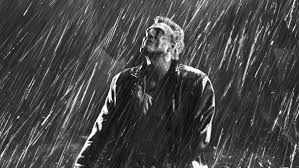 |
| An example of an Antihero from Sin City |
Male
Hero (Protagonist)
Villain (Antagonist)
Antihero (Transforms form the Antagonist to the Protagonist) - Redemption, lust, flawed
Sidekick (Police/ Moral Majority)
Extras (Side plots/Workers/Crowds)
Female
Femme Fatale - Sexuality, Danger, Risk, Antagonist, Forbidden.
Girl Next door (Redemptive Woman) - Salvation, Honour, Sacrifice, Courage, Redemption.
Sin city has examples of all of them, especially as there are several stories revolving around different characters. This film may help when writing the characters for my film
 |
| (from left to right) Femme Fatale, Girl Next Door, Antiheroes and sidekicks (female sidekick it unconventional) |
WHAT IS FILM NOIR?
Film Noir refers to a genre of film that spawned in the 1940's. The term "Film Noir" simply means black film and refers to the experimentation with lighting (or chiaroscuro). The Films will usually feature guns, smoke, and overly sexual women for the time. The owner of filmsnoir.net described the genre in a way I completely agree with: "I consider a movie a film noir if it has a “noir sensibility”. This sensibility must have a redemptive focus for me to value a film, whether redemption is achieved or not. This is what the great films noir have in common: a profoundly and deeply human response to the chaos and random contingency at the edge of existence." The theme of redempion is a common factor in many of the most critically acclaimed films of the genre and in a way, this theme is what draws many people to the films.
The target audience for film noir titles is discussed in the slideshare below. I agree with the presentation to an extent. I do think the genre is aimed at males with the violence, crime, and women. I believe that the target audience has greatly changed since the genre has been established. At this point in time, the audience varies way too much to distinguish a certain demographic. Back in the time these films were made, they were rather explicit for the time and likely not made for a young audience. I would therefore say that these films were aimed at men between the ages of 20-40.
The target audience for film noir titles is discussed in the slideshare below. I agree with the presentation to an extent. I do think the genre is aimed at males with the violence, crime, and women. I believe that the target audience has greatly changed since the genre has been established. At this point in time, the audience varies way too much to distinguish a certain demographic. Back in the time these films were made, they were rather explicit for the time and likely not made for a young audience. I would therefore say that these films were aimed at men between the ages of 20-40.
Tuesday, 8 October 2013
Audience and Pete Buckingham
An audience is a group of people experiencing an event.
(From audience)
Active - Preferred: an audience that is targeted.
Passive - Oppositional: Not the expected audience.
Preferred and Oppositional refer to How the experience is recieved as opposed to how it is sent.
Distribution: How the media is shown to an audience Streamed/Cinema Ticket/ DVD bought/TV broadcast Buy DVD
Rent DVD
Illegal Streaming
Legal Streaming
Download
Watch on TV/Freeview/Cable/Satellite
Pay to view
Cinema (Art-House, Multiplex)
Exhibition: How the media is watched from industry to audience.
Traditionalists
Streaming/Rental - Modern technology allows cheap, easy, immediate access.
Audience capability: Digital Processes
This presentation is a visual representation of Pete Buckingham's paper that I will be referencing throughout the rest of the post.
Pete Buckingham suggest that several factors effect audience patterns in the UK. There is evidence that most international audiences follow similar patterns. These patterns are as follows:
Buying films on DVD Is the most frequent way through which I watch Films. I usually watch these with family although I do watch some with friends or by myself, depending on the interest they have for the film. I spend about 4-5 hours watching these a week. I do this traditionally.
(From audience)
Active - Preferred: an audience that is targeted.
Passive - Oppositional: Not the expected audience.
Preferred and Oppositional refer to How the experience is recieved as opposed to how it is sent.
Distribution: How the media is shown to an audience Streamed/Cinema Ticket/ DVD bought/TV broadcast Buy DVD
Rent DVD
Illegal Streaming
Legal Streaming
Download
Watch on TV/Freeview/Cable/Satellite
Pay to view
Cinema (Art-House, Multiplex)
Exhibition: How the media is watched from industry to audience.
Traditionalists
Streaming/Rental - Modern technology allows cheap, easy, immediate access.
Audience capability: Digital Processes
This presentation is a visual representation of Pete Buckingham's paper that I will be referencing throughout the rest of the post.
Pete Buckingham suggest that several factors effect audience patterns in the UK. There is evidence that most international audiences follow similar patterns. These patterns are as follows:
- Level of Education and job status - He states that more educated people and therefore, people with higher class jobs such as ABC1's make up a higher population of cinema goers than people in the other categories. He says "ABC1's represent 49% of the population, but 60% of the cinema audience which increases to 66% amongst heavy cinema goers." This implies that a higher level of education makes a person more likely to go to the cinema. This Is because they would have more disposable income to spare so they can afford the cinema more often than people who have lower paid jobs.
- Age - He shows statistics that suggest that younger audiences (ages 15-24) make up a high amount of cinema goers. This trend drops as ages 35-44 make up a lower amount than the previous group and 55+ represent a low amount. People of ages 15-24 make up 32% of the population but 40% of cinema goers. People of ages 35-44 make up 38% of the population and 35% of cinema goers. People of ages 55+ make up 34% of the population but only 20% of cinema goers.
According to Pete Buckingham's method of classifying audience, I am closest to the hero seeker as I don't watch many films at the cinema (around 2 or 3 a year) and I never go on impulse, it is always well planned. The problem I have with this classification is that the groups are quite stereotypical and not everyone that follows certain trends mentioned will follow others and therefore, make them hard to classify.
Buying films on DVD Is the most frequent way through which I watch Films. I usually watch these with family although I do watch some with friends or by myself, depending on the interest they have for the film. I spend about 4-5 hours watching these a week. I do this traditionally.
I use Legal Streaming to watch a small majority of the films I watch, I do this at home, on my Xbox 360 console or my laptop alone. I tend to watch about one film a month using this method. I do this Hedonistically.
TV is the third most frequent way in which I experience film. I do this both alone and with others. I will tend to watch one film a month depending on what channels are broadcasting at the time. I will never plan to watch films on TV, I will just happen to find films on different channels. I do this traditionally.
If I were to want to find out more about audience trends, I could use all sorts of means and tools:
TV is the third most frequent way in which I experience film. I do this both alone and with others. I will tend to watch one film a month depending on what channels are broadcasting at the time. I will never plan to watch films on TV, I will just happen to find films on different channels. I do this traditionally.
If I were to want to find out more about audience trends, I could use all sorts of means and tools:
- Online surveys (Primary research)
- Interview and vox pops (Primary research)
- Statistics from Cinema's or BFI ( Secondary research)
Monday, 30 September 2013
Double Indemnity (Improved)
Double Indemnity by Billy Wilder is a classic example of the Film Noir genre and was originally distributed by Paramount pictures. This film was made in 1944 and was an adaptation from the novel by James M. Cain (written in 1927). Singer Kate Smith ran a campaign against seeing the film on moral grounds. This film was nominated for seven awards (Including best motion picture) but didn't recieve one.
This film can be found on the British Film Institute website.
http://filmstore.bfi.org.uk/acatalog/info_282.html
A scene from the film can be found here:
Double Indemnity (1944) from Kinoteatro on Vimeo.
This film has been a classic example of film noir for many media students to study and an example of a remake can be found here:
Title Sequence for Double Indemnity from Lizzy Barrett on Vimeo.
This is a clip from the opening of Double indemnity:
Here is a video in which I talk about the film, genre of Film noir and how I am going to apply what I have learnt into my OTS:
Double indemnity from Sam SheepDawg-OEight on Vimeo.
This film can be found on the British Film Institute website.
http://filmstore.bfi.org.uk/acatalog/info_282.html
A scene from the film can be found here:
Double Indemnity (1944) from Kinoteatro on Vimeo.
This film has been a classic example of film noir for many media students to study and an example of a remake can be found here:
Title Sequence for Double Indemnity from Lizzy Barrett on Vimeo.
This is a clip from the opening of Double indemnity:
Here is a video in which I talk about the film, genre of Film noir and how I am going to apply what I have learnt into my OTS:
Double indemnity from Sam SheepDawg-OEight on Vimeo.
Subscribe to:
Posts (Atom)