We plan on getting audience feedback With this final clip we have compiled:
Fatal Motive, Final from Sam SheepDawg-OEight on Vimeo.
As mentioned in the Editing post, We had to go back and re-edit the titles as we didn't quality check the spelling, This has been a quick fix and we are now ready to present.
EDIT: We showed the film to our media class and we filmed it:
SMAX Feedback Group from Sam SheepDawg-OEight on Vimeo.
We decided to put Max in charge of audience feedback and he gathered questions. We received feedback on our film being a neo noir based on reverse tracking and the music, which we understood. We also recieved feedback on audio levels being loud in places, but that was due to the volume of the piece when shown and in the context of the situation. The pen dropping is actually in the same soundclip and at the same volume as the voice so we decided to keep it.
We also had to answer questions based on thoughts that people believed were unintentional (such as the crackling voice clip), but when they were told why we made that decision, they agreed that it made sense.
We received positive feedback about the direction Max had given Jon (the antihero) regarding his movement, which was conventional, which we didn't really think of at the time but we are glad it came out the way it did.
A comment was made that it felt like a TV film, which is what we went for and we are glad it stood out as that sort of film. We also received feedback that the voice over helped to understand the story and characters, and since this was a late addition, we were pleased that it was a necessary addition.
We asked about tension and we found that they liked the build up of music and the slow motion, as they added to the suspense of the piece. They also said that we didn't give too much away, which was our intention from the beginning and we are happy that they want to know more than they do from watching the film.
When we asked about the titles, we were told that the font wasn't conventional and some of the titles could be shortened down. We agreed with this to an extent but typical noir films had more of the roles and credits at the start, and they understood the placement. We also received feedback that the main film title was unclear and it was really quick. We will remedy this immediately
We received an interesting comment about the fact that it felt like a trailer at the start, but then you understood that it was an opening title sequence once the other scene started playing.
We hope to play this to other groups and hand out questionnaires, to gain extra feedback and to see if the target audiences needs were met.
Showing posts with label Audience. Show all posts
Showing posts with label Audience. Show all posts
Tuesday, 25 February 2014

Wednesday, 18 December 2013
Certificate
The film we intend on producing (Fatal Motive) will be a 12 or a 12A. This is based on the following
- Drug use (Smoking)
- Violence and Gore (Gun, Blood)
- Implied Sexual Content
Were we to produce the full film, These issues would be shown more frequently, but not intensified or glorified. The decision to certify the film as a 12 or 12A is based on the list from the BBFC website (mentioned in this post: http://asmediastudiessamshepherd2013.blogspot.co.uk/2013/11/bbfc-and-guidelines.html)
This does not affect our target audience in any way as we are producing the film for people our own age. This does not restrict the audience from viewing the film in any way.
Tuesday, 10 December 2013
Fatal Motive: Audience and Distribution
We needed to decide on an audience for our film and we were quickly on the same page. The audience we decided upon were teems (predominantly male) that have a relative disposable income. This is because of our proposed distribution method. We have said that if we were to produce the full film, we would stream it. This is due to the lack of hugely expensive equipment and lack of budget to distribute it elsewhere. We talked about art house cinema but we decided against it in the end.
Wednesday, 27 November 2013
BBFC and Guidelines
The BBFC (British Board of Film Classification) is a company responsible for certifying all films screened in the Britain according to how certain age groups will view it. The BBFC give certificates according to the content of the film. This content can include:
-Discrimination
-Drugs
-Horror
-Imitable Behaviour
-Language
-Nudity
-Sex
-Theme
-Violence
-Titles
They may also give warnings if it is obvious it could induce seisures or cause harm and distress to any viewers if they have trouble with Photo or pattern sensitivity, motion sickness and reactions to low frequency sound.
All of the guidelines as well as the research to which the guidelines are based on can be downloaded on the BBFC Website
Lucy Brett from the BBFC joins us for FILMCLUB Live from FILMCLUB on Vimeo.
-Discrimination
-Drugs
-Horror
-Imitable Behaviour
-Language
-Nudity
-Sex
-Theme
-Violence
-Titles
They may also give warnings if it is obvious it could induce seisures or cause harm and distress to any viewers if they have trouble with Photo or pattern sensitivity, motion sickness and reactions to low frequency sound.
All of the guidelines as well as the research to which the guidelines are based on can be downloaded on the BBFC Website
Lucy Brett from the BBFC joins us for FILMCLUB Live from FILMCLUB on Vimeo.
Tuesday, 22 October 2013
Genre
This video explains genres, hybrid genres and sub genres and how it affects audiences as well as institutions and industries.
Genre and Sub-Genre from Sam SheepDawg-OEight on Vimeo.
Wednesday, 9 October 2013
WHAT IS FILM NOIR?
Film Noir refers to a genre of film that spawned in the 1940's. The term "Film Noir" simply means black film and refers to the experimentation with lighting (or chiaroscuro). The Films will usually feature guns, smoke, and overly sexual women for the time. The owner of filmsnoir.net described the genre in a way I completely agree with: "I consider a movie a film noir if it has a “noir sensibility”. This sensibility must have a redemptive focus for me to value a film, whether redemption is achieved or not. This is what the great films noir have in common: a profoundly and deeply human response to the chaos and random contingency at the edge of existence." The theme of redempion is a common factor in many of the most critically acclaimed films of the genre and in a way, this theme is what draws many people to the films.
The target audience for film noir titles is discussed in the slideshare below. I agree with the presentation to an extent. I do think the genre is aimed at males with the violence, crime, and women. I believe that the target audience has greatly changed since the genre has been established. At this point in time, the audience varies way too much to distinguish a certain demographic. Back in the time these films were made, they were rather explicit for the time and likely not made for a young audience. I would therefore say that these films were aimed at men between the ages of 20-40.
The target audience for film noir titles is discussed in the slideshare below. I agree with the presentation to an extent. I do think the genre is aimed at males with the violence, crime, and women. I believe that the target audience has greatly changed since the genre has been established. At this point in time, the audience varies way too much to distinguish a certain demographic. Back in the time these films were made, they were rather explicit for the time and likely not made for a young audience. I would therefore say that these films were aimed at men between the ages of 20-40.
Tuesday, 8 October 2013
Audience and Pete Buckingham
An audience is a group of people experiencing an event.
(From audience)
Active - Preferred: an audience that is targeted.
Passive - Oppositional: Not the expected audience.
Preferred and Oppositional refer to How the experience is recieved as opposed to how it is sent.
Distribution: How the media is shown to an audience Streamed/Cinema Ticket/ DVD bought/TV broadcast Buy DVD
Rent DVD
Illegal Streaming
Legal Streaming
Download
Watch on TV/Freeview/Cable/Satellite
Pay to view
Cinema (Art-House, Multiplex)
Exhibition: How the media is watched from industry to audience.
Traditionalists
Streaming/Rental - Modern technology allows cheap, easy, immediate access.
Audience capability: Digital Processes
This presentation is a visual representation of Pete Buckingham's paper that I will be referencing throughout the rest of the post.
Pete Buckingham suggest that several factors effect audience patterns in the UK. There is evidence that most international audiences follow similar patterns. These patterns are as follows:
Buying films on DVD Is the most frequent way through which I watch Films. I usually watch these with family although I do watch some with friends or by myself, depending on the interest they have for the film. I spend about 4-5 hours watching these a week. I do this traditionally.
(From audience)
Active - Preferred: an audience that is targeted.
Passive - Oppositional: Not the expected audience.
Preferred and Oppositional refer to How the experience is recieved as opposed to how it is sent.
Distribution: How the media is shown to an audience Streamed/Cinema Ticket/ DVD bought/TV broadcast Buy DVD
Rent DVD
Illegal Streaming
Legal Streaming
Download
Watch on TV/Freeview/Cable/Satellite
Pay to view
Cinema (Art-House, Multiplex)
Exhibition: How the media is watched from industry to audience.
Traditionalists
Streaming/Rental - Modern technology allows cheap, easy, immediate access.
Audience capability: Digital Processes
This presentation is a visual representation of Pete Buckingham's paper that I will be referencing throughout the rest of the post.
Pete Buckingham suggest that several factors effect audience patterns in the UK. There is evidence that most international audiences follow similar patterns. These patterns are as follows:
- Level of Education and job status - He states that more educated people and therefore, people with higher class jobs such as ABC1's make up a higher population of cinema goers than people in the other categories. He says "ABC1's represent 49% of the population, but 60% of the cinema audience which increases to 66% amongst heavy cinema goers." This implies that a higher level of education makes a person more likely to go to the cinema. This Is because they would have more disposable income to spare so they can afford the cinema more often than people who have lower paid jobs.
- Age - He shows statistics that suggest that younger audiences (ages 15-24) make up a high amount of cinema goers. This trend drops as ages 35-44 make up a lower amount than the previous group and 55+ represent a low amount. People of ages 15-24 make up 32% of the population but 40% of cinema goers. People of ages 35-44 make up 38% of the population and 35% of cinema goers. People of ages 55+ make up 34% of the population but only 20% of cinema goers.
According to Pete Buckingham's method of classifying audience, I am closest to the hero seeker as I don't watch many films at the cinema (around 2 or 3 a year) and I never go on impulse, it is always well planned. The problem I have with this classification is that the groups are quite stereotypical and not everyone that follows certain trends mentioned will follow others and therefore, make them hard to classify.
Buying films on DVD Is the most frequent way through which I watch Films. I usually watch these with family although I do watch some with friends or by myself, depending on the interest they have for the film. I spend about 4-5 hours watching these a week. I do this traditionally.
I use Legal Streaming to watch a small majority of the films I watch, I do this at home, on my Xbox 360 console or my laptop alone. I tend to watch about one film a month using this method. I do this Hedonistically.
TV is the third most frequent way in which I experience film. I do this both alone and with others. I will tend to watch one film a month depending on what channels are broadcasting at the time. I will never plan to watch films on TV, I will just happen to find films on different channels. I do this traditionally.
If I were to want to find out more about audience trends, I could use all sorts of means and tools:
TV is the third most frequent way in which I experience film. I do this both alone and with others. I will tend to watch one film a month depending on what channels are broadcasting at the time. I will never plan to watch films on TV, I will just happen to find films on different channels. I do this traditionally.
If I were to want to find out more about audience trends, I could use all sorts of means and tools:
- Online surveys (Primary research)
- Interview and vox pops (Primary research)
- Statistics from Cinema's or BFI ( Secondary research)
Friday, 4 October 2013
Representation: Double indemnity OTS (improved but still needs to add pictures)
As double indemnity was created in the 1940's, representation is very stereotypical of the views one might have in that era. I am analysing the Opening Title sequence of the film in terms of representation as well as Sound and Style and the form of the title sequence. I also briefly discuss industry and audience.
Representation
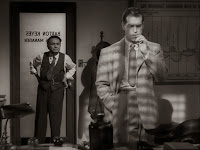 All Male Cast shows a male dominance in work and high status as it is situated in what is obviously a
workplace of high status.
Trilby's, suits and tuxedos reinforce a high status
The man is in charge, He is dismissive and is the strong and silent type
Male is a juxtaposition of characteristics (Scruffy/Shot/Uses Slang/Status and Wealth)The car he has shows he has quite a high status
Black actors are cleaning which shows the status of black people in that era as quite poor
A lot of slang is used which suggests crime involvement
It is shot in a big city
Obsequious (overly polite and obedient) door man further states and reinforces the status.
Sound and Style
Quite expensive at the time of release
The music is Classical, timeless, contextual and reminiscent of music tastes at the time.
Form
The form is simply the order of appearance in the Opening Title Sequence.
Studio
Producer
Title
Director
Cast
Production Team
Industry
As this was a time in which there was little variation in film industries, the film is a mainstream example of cinema at the time
Audience
Male and Couples
Vicariously living through others experiences
Generic pleasures: The pleasures of the genre
Representation
 All Male Cast shows a male dominance in work and high status as it is situated in what is obviously a
 workplace of high status.
Trilby's, suits and tuxedos reinforce a high status
The man is in charge, He is dismissive and is the strong and silent type
Male is a juxtaposition of characteristics (Scruffy/Shot/Uses Slang/Status and Wealth)The car he has shows he has quite a high status
Black actors are cleaning which shows the status of black people in that era as quite poor
A lot of slang is used which suggests crime involvement
It is shot in a big city
Obsequious (overly polite and obedient) door man further states and reinforces the status.
Sound and Style
Quite expensive at the time of release
The music is Classical, timeless, contextual and reminiscent of music tastes at the time.
Form
The form is simply the order of appearance in the Opening Title Sequence.
Studio
Producer
Title
Director
Cast
Production Team
Industry
As this was a time in which there was little variation in film industries, the film is a mainstream example of cinema at the time
Audience
Male and Couples
Vicariously living through others experiences
Generic pleasures: The pleasures of the genre
Subscribe to:
Posts (Atom)